
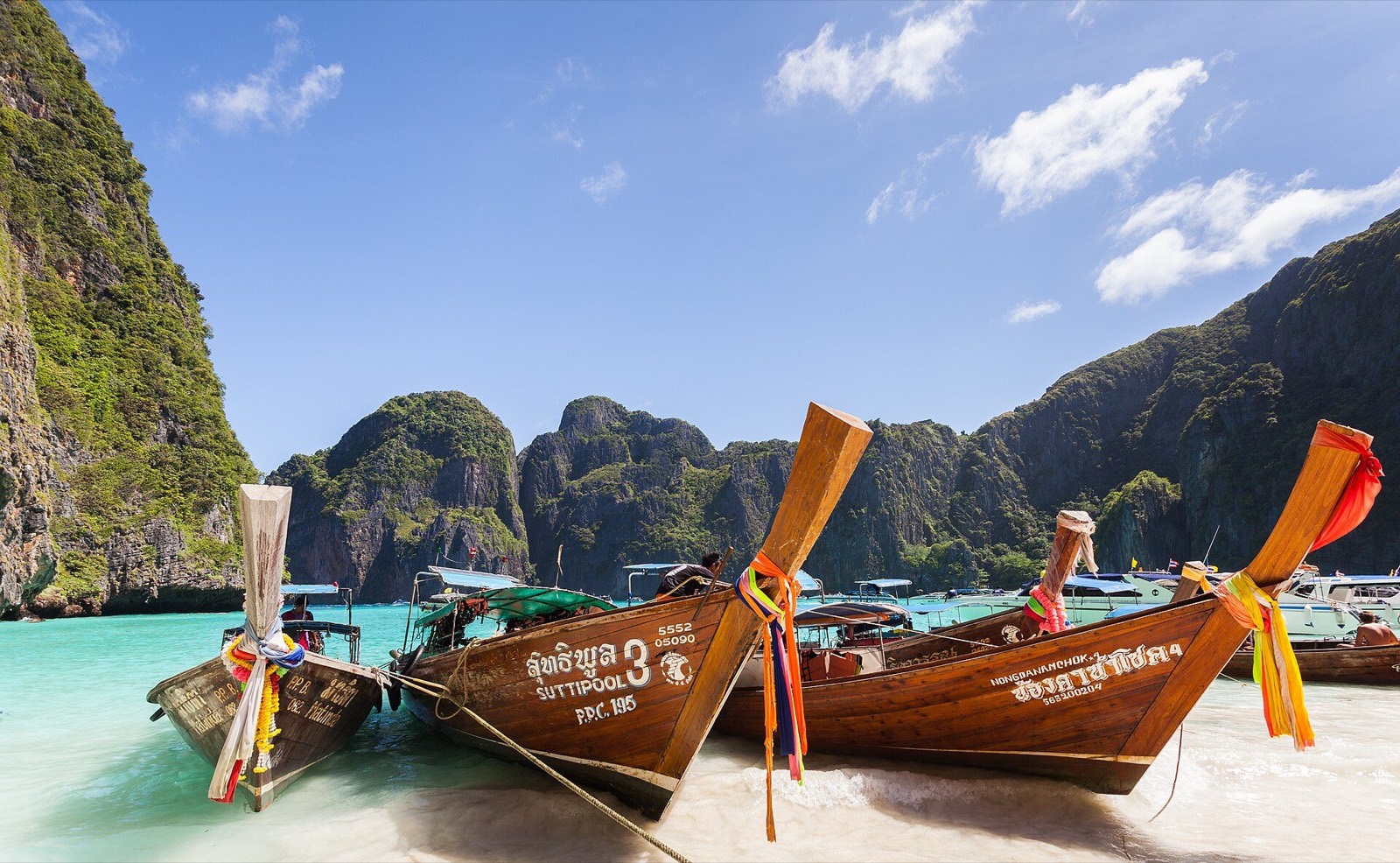
Southern Thailand is where maps encourage bad decisions. Islands look close, ferry journeys look simple and every beach appears essential. The better route chooses one coast, gives transfers room and lets the sea shape the schedule.
The shape of the trip
- 01Days 1–4Phuket or Krabi
Land, settle and explore the gateway properly.
- 02Days 5–7Khao Sok
Forest, lake and a complete change of pace.
- 03Days 8–13One island or beach base
Stay long enough for both adventure and empty time.
- 04Day 14Mainland departure
Return before the international travel day where possible.
First choose the coast
The Andaman coast—Phuket, Krabi, Khao Lak, Koh Lanta and the Phi Phi area—usually forms the cleanest family of connections. The Gulf—Koh Samui, Koh Phangan and Koh Tao—forms another. They can be combined, but doing so spends a valuable day crossing the peninsula and increases the number of failure points.
Seasonal patterns differ between the coasts, and southern east-coast rain can remain significant after upper Thailand begins to dry. Use climate history to choose the broad route, then use current official forecasts and operator advice for individual boat days.
THE USEFUL BITChoose the coast before choosing the islands. It is the decision that makes the rest of the route coherent.
Option A: Phuket, Khao Sok and Koh Lanta
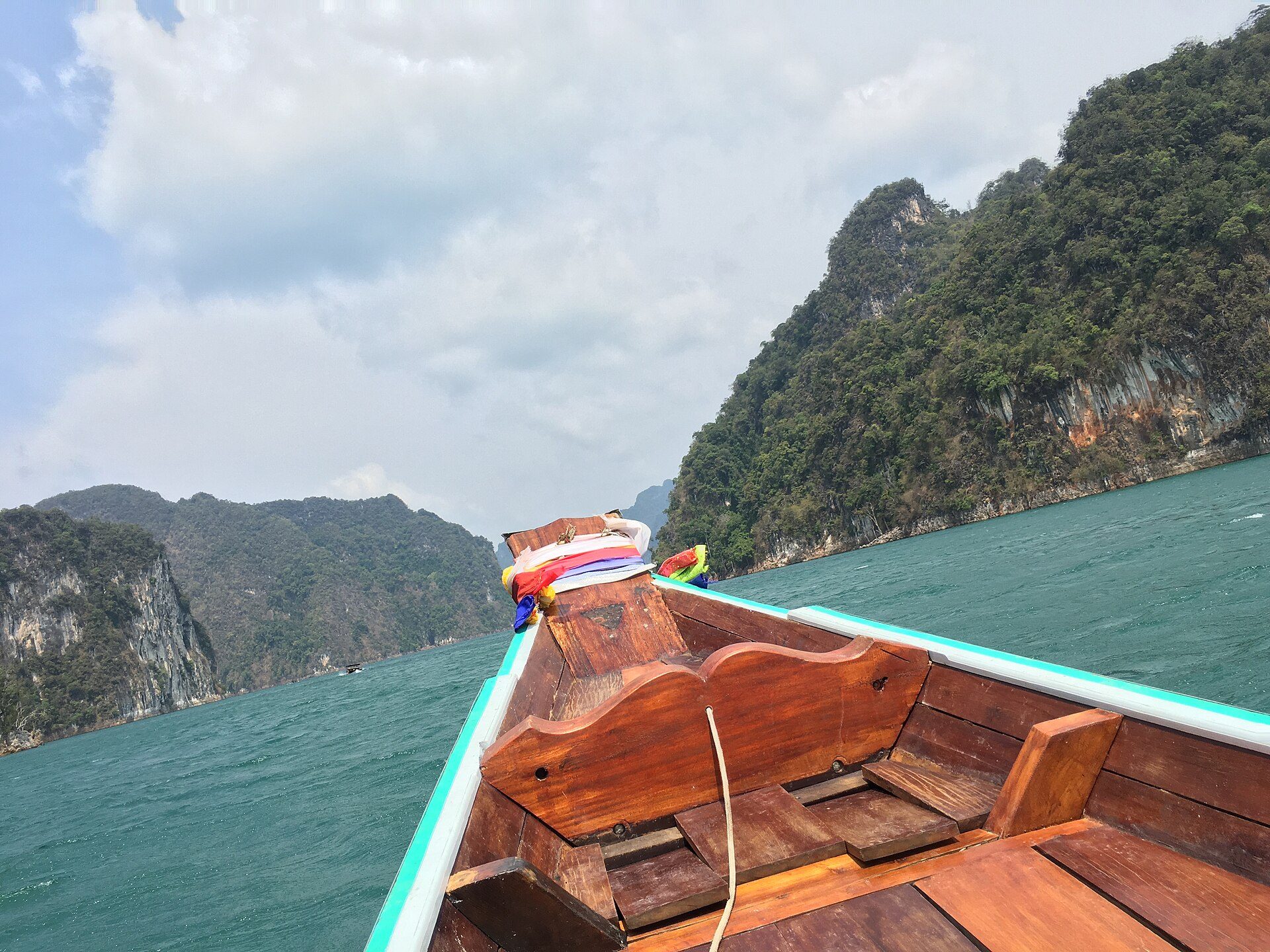
Start with Phuket for convenient flights and a broad choice of accommodation. Spend enough time to see Old Town and enjoy one west-coast base rather than treating the island purely as an airport. Travel north to Khao Sok for rainforest and Cheow Lan Lake, then finish on Koh Lanta for a slower island chapter.
This route suits travellers who want variety more than nightlife. Connections need checking against the exact season, and the Khao Sok transfer should be treated as a journey in its own right.
Option B: Krabi, Railay and one island

Base first in Ao Nang or Krabi Town for practical access to food, road transfers and boat departures. Railay can be a day trip, but two nights there create a more atmospheric experience once the day crowds leave. Finish with one island selected for your style and operating season.
Koh Lanta works for slower stays and road exploration. Phi Phi delivers dramatic scenery but is busier and more constrained. Smaller Trang islands can feel more remote, which also means fewer transport options and a greater need to verify seasonal services.
How to choose a boat trip
The destination name is only half the product. Ask where the boat departs, how many passengers it carries, how long transfers take, what happens in poor conditions and whether national-park fees are included. Early departures can improve busy routes, but only if the transport to the pier is realistic from your hotel.
Speedboats save time but can be physically demanding in chop. Longtails are atmospheric and useful for shorter local trips, not a universal substitute. Never treat a fixed online itinerary as a guarantee that nature will follow it.
The final-night rule
Do not place an international flight immediately after a ferry from a remote island. Weather, mechanical issues and timetable changes can remove the margin. Return to Phuket, Krabi, Samui or the mainland at least one night before a high-stakes departure when the consequence of missing it would be serious.
That buffer need not feel wasted. Make it a good final dinner, a comfortable airport hotel or one last Old Town evening. Peace of mind is part of the holiday.
Questions travellers actually ask
How many islands should I visit in two weeks?
Usually one or two, depending on whether a mainland nature stop is included. Three or four islands often turns the trip into repeated packing and ferry days.
Andaman coast or Gulf coast?
Choose using your dates, preferred atmosphere and international flight route. Seasonal weather patterns differ, but no month guarantees perfect sea conditions.
Should I book ferries in advance?
Book high-demand or route-critical services once your accommodation is fixed, but verify the operator, pier and seasonal timetable rather than relying on a generic route listing.
What this guide is built on
We use primary sources for rules, transport and official guidance, then add editorial judgement about pace and route design. Live timetables, entry rules, weather and access can change—always recheck the linked authority before paying or travelling.