
OUR GUIDE
Chiang Rai for the first time
How to balance contemporary temple art, northern landscapes and border-region journeys without turning Chiang Rai into one exhausting day trip from Chiang Mai.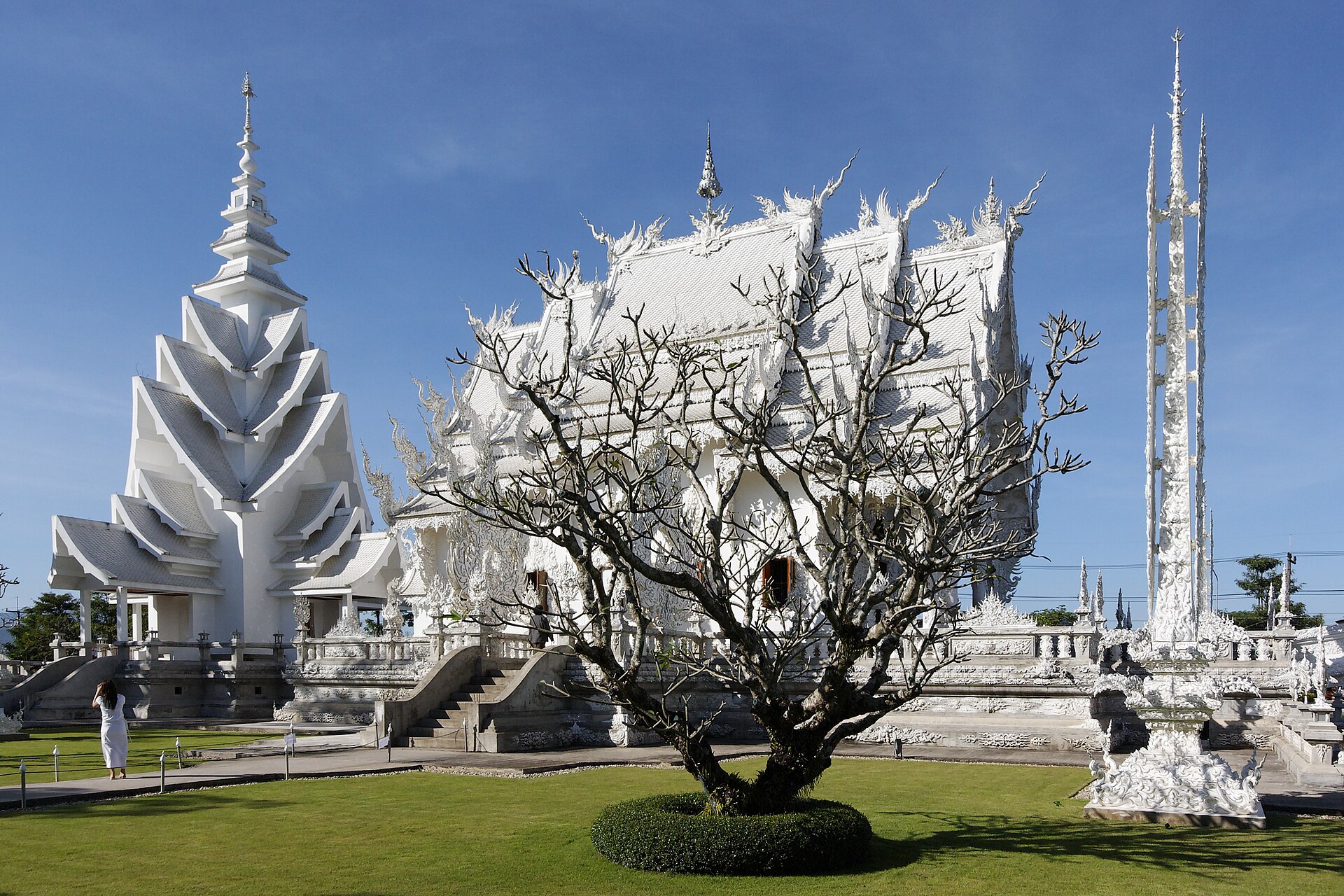
Chiang Rai is often sold as a long excursion from Chiang Mai, but the road time leaves little room for understanding the place. The city’s contemporary temples, markets and museums combine with a much larger province of tea landscapes, mountain communities and border geography.
Three nights is a useful minimum. Use one day for the city and nearby art sites, then choose either a mountain landscape, Doi Tung or a carefully contextualised Mekong and border-region journey.
Where to stay
Central Chiang Rai The simplest first base for the night bazaar, clock-tower area, food and tour pickups. It is compact enough for easy evenings.
Kok River A quieter resort-style alternative near the city. Check the real walking route or transport to central restaurants.
Doi Tung and northern hills A separate landscape stay for gardens, mountain air and slower local journeys. It should not be treated as a central-city hotel.
Mekong and border towns Useful only when the border landscape or a specific onward journey is central to the trip. Entry rules remain separate from domestic sightseeing.
A sensible first day: city, food and one piece of art
Settle into central Chiang Rai, use the evening market or local restaurants and visit one nearby museum or temple if arrival allows. Leave the famous outlying sites for daylight and a coherent route.
Temple sites are active or culturally significant places even when their art feels theatrical. Dress respectfully and follow photography and access instructions.
Build a considered art-and-temple day
Wat Rong Khun, Wat Rong Suea Ten and Baan Dam are different creative projects in different directions. Two thoughtfully visited sites and a good lunch make a better day than racing through every headline.
Check current opening information from the responsible venue and keep transport waiting times explicit when using a private driver.
Choose the northern landscape
Doi Tung, tea-growing districts and Mekong viewpoints belong to longer road days. Pick the landscape and story that genuinely interests the group.
Border areas require cultural sensitivity. Do not turn communities or complex regional history into a photo stop; use informed local guidance when it improves context.
Connect Chiang Rai to the route
The city has an airport and long-distance bus links. Chiang Mai is connected by road rather than rail, so the journey deserves a visible place in the itinerary.
Flying can save time on a wider Thailand route, but airport transfers and baggage terms still belong in the comparison.
Air and mountain conditions matter
Cooler months bring comfortable mornings and higher demand. Smoke and poor air quality can affect northern Thailand during the burning season and may change outdoor priorities.
Check current air and weather information near travel. If conditions are poor, move strenuous or viewpoint-led days rather than pretending the historical season guarantees visibility.
What catches first-time visitors out
- Visiting only as a Chiang Mai day trip.The road consumes the time needed to understand the city and province.
- Putting every famous temple into one circuit.Different directions and deeper visits deserve a selective plan.
- Treating border geography as a novelty.Use respectful, informed context and check formal requirements separately.
- Ignoring air quality.Mountain views and outdoor effort may need to change.
- Assuming there is a train from Chiang Mai.Plan the road or air connection explicitly.
USE YOUR DIARY
Keep Chiang Rai in one place
Save Chiang Rai as an idea, or let the Smart Diary review how it fits your existing route before you approve a change.Check before you go
Weather, access, transport and local operating details change. Use current information from the responsible organisations before fixing an important journey.