Cheow Lan Lake
Use this as the main anchor and let the surrounding area build naturally around it.

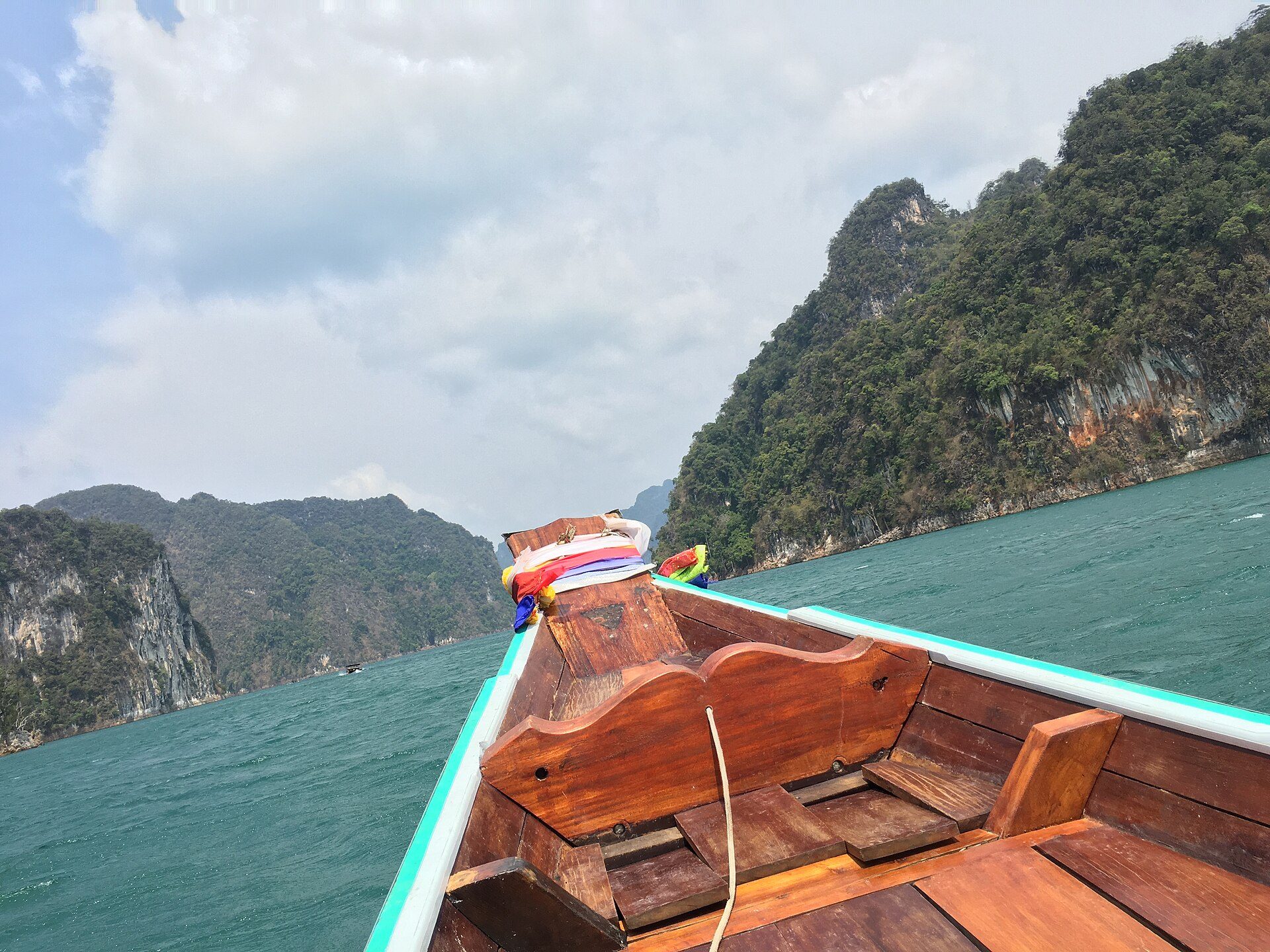 South · Thailand · Photo: Avenlarosa · CC BY-SA 4.0
PLACE NOTE 014
Rainforest, limestone and lake journeys offer a different southern Thailand.
Think of this as a base, not a pin on a map. Its neighbourhoods, journeys and natural rhythm matter more than the headline sights.
Rainforest, limestone and lake journeys offer a different southern Thailand. A famous place is not automatically the right place, and a quieter alternative is not automatically better. Judge it against your pace, your travelling companions and the time you genuinely have.
Khao Sok sits between the Andaman coast and Surat Thani transport network. Shared vans connect from Surat Thani, Krabi, Phuket and Khao Lak. ‘Khao Sok’ can mean the village by the national-park entrance or Cheow Lan Lake’s pier, which are roughly an hour apart by road—confirm the meeting point.
For short urban journeys, combine walking with songthaews, local taxis or reputable ride-hailing where available. Outside the centre, attractions spread quickly and a driver can save an entire day. Compare the real door-to-door journey, not just the kilometres shown on the map.
How much time? Allow at least two nights, usually split deliberately between the village/rainforest side and Cheow Lan Lake. Transport days reduce usable time quickly.
Use this as the main anchor and let the surrounding area build naturally around it.
Best when it fits the same part of the day rather than requiring a separate cross-town journey.
Check the practical journey before committing it to the Diary.
Leave this flexible until the weather and your energy are clearer.
Save these as real travel ideas. They will wait until you are ready to place them into a day.
Begin with Cheow Lan Lake. It gives the clearest introduction without forcing the whole guide into one day. Continue with jungle walks only if energy, heat and journey time still feel comfortable.
A flexible idea drawn directly from this field note.
A flexible idea drawn directly from this field note.
A flexible idea drawn directly from this field note.
November to February is often the easiest broad window, but regional conditions matter more than a national season label. Hot-season afternoons demand a slower pace; wet-season travel rewards flexibility and produces greener scenery. Check local forecasts and transport conditions close to the day.
Peak season usually improves transport choice and weather confidence, but increases demand. Shoulder and green-season travel can feel more spacious and vivid. Treat this as route guidance, then check live conditions shortly before travelling.
Give the place enough time to recover from arrival, learn one local area and enjoy at least one day without a major transfer.
Begin with Cheow Lan Lake. It gives the clearest introduction without forcing the whole guide into one day. Continue with jungle walks only if energy, heat and journey time still feel comfortable.
Use the next good-weather window for floating stays. Keep wildlife-focused guiding as the flexible piece: it is easier to move, shorten or replace if conditions change.
I would not try to “complete” Khao Sok complete guide. I would choose one early anchor, one neighbourhood or landscape to understand slowly, and one evening with nothing booked. Rain is part of the ecosystem; operators and equipment matter. That is the constraint I would design around, not discover after paying.
Choose it if cheow lan lake and jungle walks genuinely match how you like to travel.
Reconsider or shorten it if the journey, crowd level or seasonal uncertainty conflicts with the pace you want. Rain is part of the ecosystem; operators and equipment matter.
The thing to watch: Rain is part of the ecosystem; operators and equipment matter.
Thailand Diary synthesises these sources into practical judgement. We do not reproduce unverified prices, availability or fixed schedules.