
OUR GUIDE
Pai for the first time
How to enjoy Pai's mountain setting without turning it into a rushed loop of viewpoints, and how to plan the winding road from Chiang Mai honestly.Check the linked sources for current details. Editorial information, not live availability.
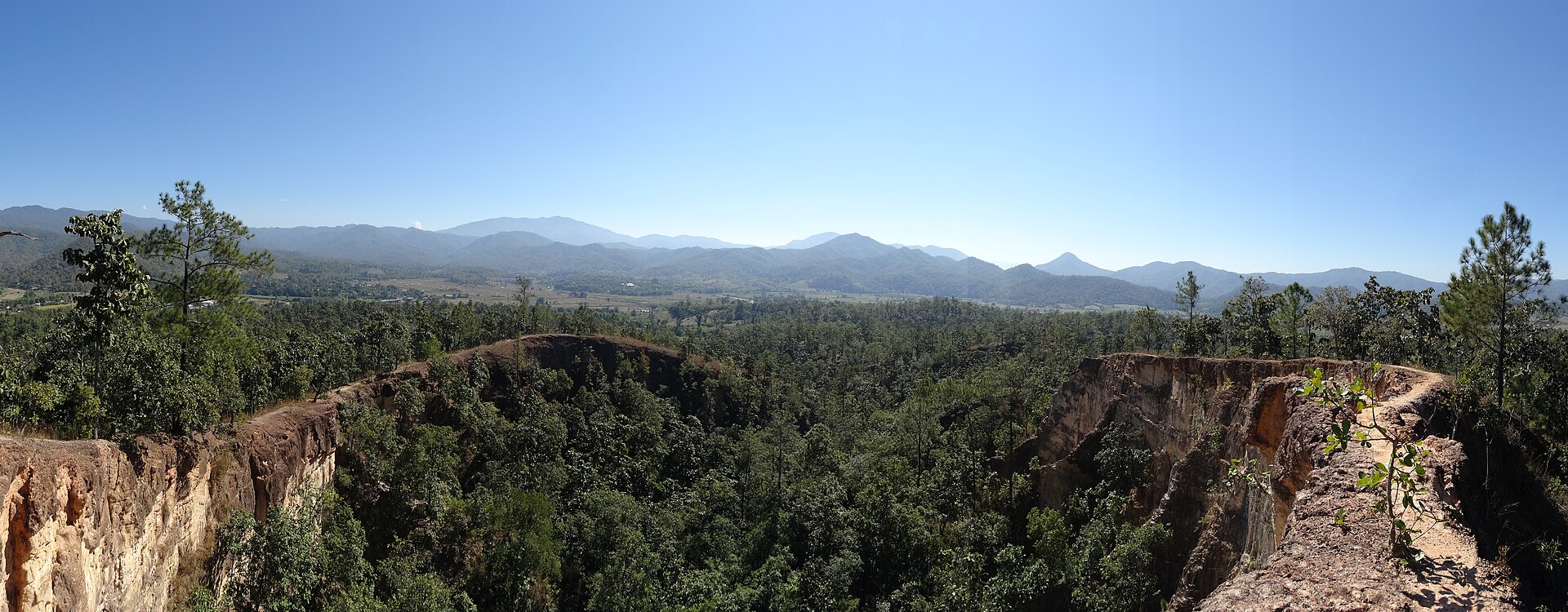
Pai is small, but the surrounding valley is not. The town, canyon, hot springs, waterfalls and Mae Hong Son road all need different amounts of time and transport.
A three-night Pai chapter with a walkable town base, one deliberate valley day and protected road connections.
Where to stay
Pai town The practical first base for Walking Street, food and shared transport. Central rooms trade quiet for an easy walk home.
Riverside A softer stay close to town, with bridge access and a slower morning atmosphere. Check the exact walking route after dark.
Northern valley Scenic countryside accommodation with more space, but every meal and evening may require arranged transport.
Mae Hi and southern edge Useful for access towards the canyon and hot springs. It feels separate from the centre despite the short map distance.
Your first day: town first, valley later
After the winding journey from Chiang Mai, keep your first afternoon in Pai town. Find your accommodation, walk the central streets and leave the outlying sights for a rested day. A valley bungalow and a room near Walking Street create different evenings: check the return journey before choosing a remote stay.
Use Pai Walking Street for an informal evening around Chaisongkran and Rungsiyanon roads. Browse before choosing dinner rather than reserving a packed sequence of stops. If the group separates, agree a meeting point and a way home; people staying outside town should not assume the last part is an easy walk.
Give the valley one coherent day
Choose either a western or southern loop instead of collecting every viewpoint. Pai Canyon, hot springs and waterfalls change with heat, water level and season.
A local driver is often the sensible choice when road experience, licences or insurance do not support riding independently.
Keep Walking Street as the evening
The centre is most sociable after dark, with food, small bars and a compact traveller circuit. Treat it as an evening plan rather than an extra stop after a full road day.
Opening patterns and individual venues change, so use the Diary to hold a flexible evening rather than a guaranteed list.
Make the Chiang Mai road visible
The road is winding and motion sickness is common. Minivan, private transfer and motorbike are materially different journeys, not interchangeable tickets.
Protect arrival day and avoid placing an important onward flight immediately after the return road journey.
Use the mountain setting responsibly
Viewpoints and rural stops are lived-in places, not photo sets. Park carefully, follow local signs and avoid blocking homes or roads.
Rain, haze and heat can change outdoor plans. Keep one slower café, food or town option available.
Which hot spring—and what else belongs with it?
Tha Pai and Sai Ngam are different hot-spring outings, not two names for one attraction. Sai Ngam is in the Lum Nam Pai protected area and involves a mountain-road approach. Choose one, confirm current access and fees, and ask your driver exactly which spring the trip includes.
Pai Canyon is a separate landscape stop. You do not have to walk its exposed narrow ridges to appreciate the view; turn back if the footing or exposure does not suit you. Put comfort and the return journey ahead of collecting every sunset photograph. Keep a wet-weather alternative in town.
Food and the price of staying outside town
Use Walking Street as an evening of browsing rather than a fixed restaurant crawl. Compare a couple of stalls, choose a meal that suits your appetite and leave room for something else later. Visitors wanting quieter dinners should check the choices near their accommodation before committing to a countryside room.
The largest budget trade-off is often the room-versus-transport calculation. A bungalow with a view is not necessarily the economical option once every meal and evening needs a ride. Compare a central room plus one arranged valley outing with a remote stay plus repeated transfers. For friends sharing a driver, agree who is joining before splitting the quote.
How long to stay—and what not to combine
Two nights gives you one full valley day between road journeys; three gives more room for a slow town day. Neither requires an extension to Mae Hong Son. Treat that as a separate chapter if you want it, with its own road time and overnight plan rather than a quick additional viewpoint.
Choose a southern outing or a northern hot-spring outing after checking conditions, not a complete valley circuit by default. If the group has had enough of the road, a day close to town is the useful alternative. A café break is enjoyable on its own; it does not need to be disguised as a must-see attraction.
When a mountain day changes
Put the exact spring or viewpoint name in the Diary rather than a generic “Pai tour”. Keep any agreed driver meeting point with it. That makes it easier for a friend to understand the plan, compare a different outing or opt out without losing the shared evening.
Rain, poor visibility and tiredness after the transfer can all change the right choice. Ask about access before setting out and be comfortable dropping a stop. You do not need to replace a cancelled outdoor activity with another paid experience; protecting an easy return to town is more valuable than completing a list.
What catches first-time visitors out
- Treating Pai as a quick checklist.The valley works better with one route and time in town.
- Hiring a scooter by default.Licence, insurance and mountain-road experience must lead the decision.
- Ignoring motion sickness.The Chiang Mai road deserves preparation and recovery time.
- Booking a remote room without transport.A beautiful view can create repeated evening journeys.
- Expecting every waterfall year-round.Water level and access vary with current conditions.
YOUR TRIP
Keep Pai in one place
Save this guide to your saved ideas and come back to the places that interest you.Check before you go
Weather, access, transport and local operating details change. Use current information from the responsible organisations before fixing an important journey.